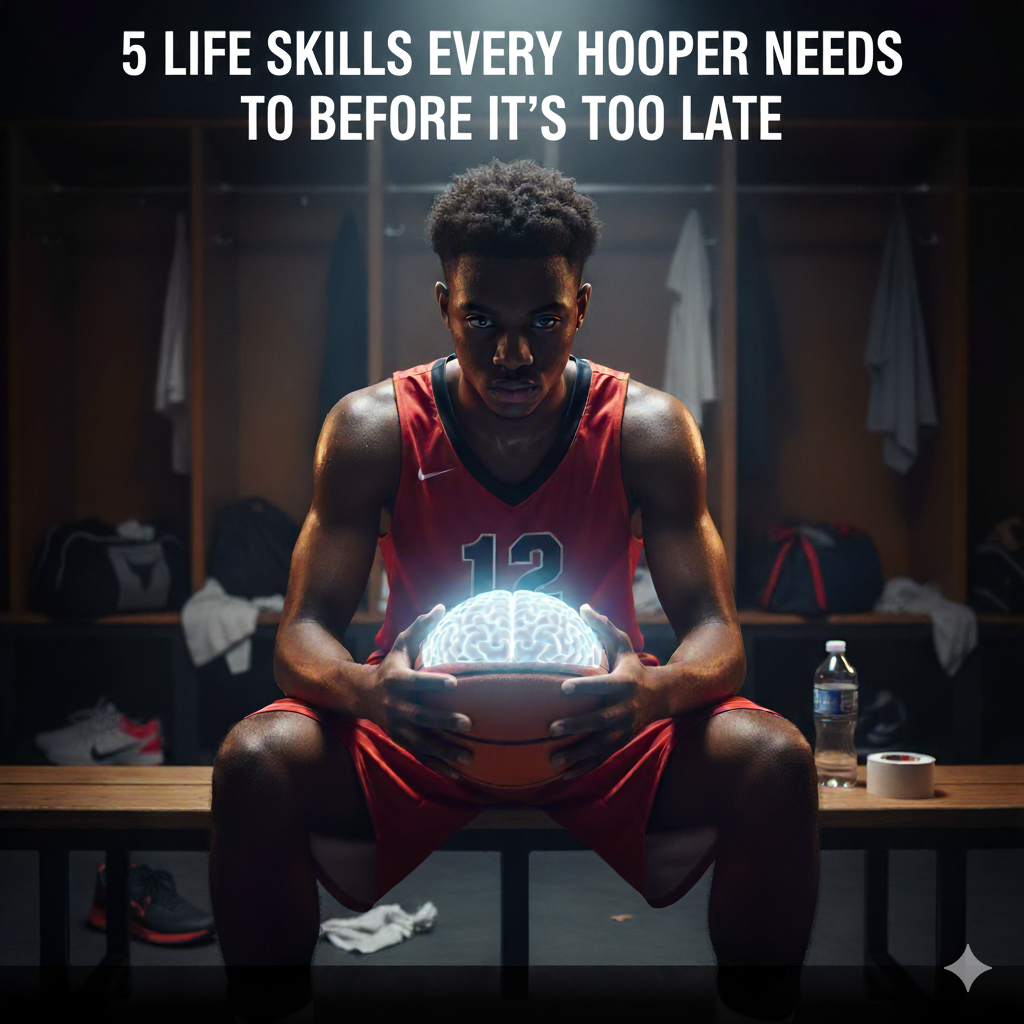
Real talk: You can have all the handles in the world, but without these five skills, you’re selling yourself short both on and off the hardwood.
Look, we get it. You’ve got your jumper on point, your handles are crazy, and you’re putting up buckets in your sleep. But here’s the thing nobody tells you until it’s too late—basketball IQ means nothing if your life IQ is at zero. Whether you’re trying to make it to the league or just trying to make it through life, these five essentials are non-negotiable. Let’s break it down.
1. WORK ETHIC AND SELF-MOTIVATION
The Real: Nobody’s Coming to Save You
You know that feeling when your alarm goes off at 5:30 AM for that early morning workout and your bed feels like a cloud? Yeah, that’s the moment that separates the ones who make it from the ones who talk about making it. Work ethic isn’t about going hard when your coach is watching or when the scouts are in the gym. It’s about what you do when nobody’s looking, when nobody’s checking for you, when there’s no glory in it.
Self-motivation is that internal fire that makes you run it back one more time, study one more play, get up one more shot even when you’re exhausted. It’s the difference between wanting success and needing it like you need air.
Why This Matters: Talent might get you noticed, but work ethic keeps you relevant. The graveyard of basketball dreams is full of talented players who thought their natural ability was enough. Meanwhile, the ones who outworked everybody are cashing checks and living their dreams. Plus, this mindset carries over to everything—school, relationships, your future career. You build this muscle now, you’re set for life.
Signs You’re Getting It:
- You’re in the gym on your off days without anyone telling you to be there
- You find yourself watching film at night because you genuinely want to improve
- When practice ends, you’re not the first one out the door
- You set personal goals and actually track them instead of just talking about them
- You don’t need external validation or likes to keep grinding
- You push yourself even when you’re already tired
Signs You DON’T Get It:
- Your parents are still waking you up every morning like you’re in elementary school
- Someone else is running your whole schedule and you just show up where they tell you
- You need constant reminders to do basic things like pack your bag or charge your phone
- Practice ends and you’re racing to the door before coach finishes talking
- You only go hard when someone’s watching or when there’s something to gain immediately
- Your goals are all talk—you say you want to be great but your daily actions say otherwise
- You’re scrolling social media more than you’re working on your game
- You make excuses for why you can’t work out instead of finding a way to make it happen
How to Build This Skill: Start small, build big. You don’t go from zero to Kobe overnight. Pick one thing—maybe it’s 100 free throws every day or 30 minutes of ball handling. Do it every single day for a week. Then two weeks. Then a month. Before you know it, it’s automatic. Create a routine that’s non-negotiable. Write down your goals where you can see them every day. Find your “why”—that deep reason that makes you willing to sacrifice comfort. Maybe it’s getting your family out the struggle, maybe it’s proving doubters wrong, maybe it’s because you genuinely love the game. Whatever it is, connect to it daily. Get an accountability partner who’s on the same mission. Delete distractions from your phone during training hours. And here’s the real secret: celebrate small wins. Progress is progress, and recognizing it keeps you hungry.
2. RESILIENCE AND MENTAL TOUGHNESS
The Real: You’re Going to Take L’s—It’s How You Respond That Counts
Let’s keep it a stack: you’re going to get dunked on. You’re going to airball in a big moment. You’re going to lose games you should’ve won. You’re going to get injured. Coaches are going to doubt you. Scouts might overlook you. Your shot’s going to be off for weeks at a time. You might not make the team you want. That’s not negativity—that’s basketball. That’s life.
Mental toughness isn’t about not feeling the pain, the disappointment, or the frustration. It’s about feeling all of that and still lacing up your shoes the next day. It’s about treating failure like film study—something to learn from, not something to run from. The mind is where games are won and lost, and if your mental isn’t right, your physical doesn’t matter.
Why This Matters: The basketball journey is not a straight line to the top. It’s full of setbacks, roadblocks, and plot twists. The players who make it aren’t the ones who never fail—they’re the ones who fail and keep pushing. This skill literally determines whether you quit or become great. Off the court, life is going to test you even harder. Relationships end, opportunities fall through, plans change. If you can’t bounce back, you’re stuck. But if you build that resilience muscle now, nothing can keep you down permanently.
Signs You’re Getting It:
- Bad games don’t ruin your whole week anymore
- You actively seek feedback instead of getting defensive
- You can laugh at mistakes while still taking them seriously
- When you get benched, you use it as fuel, not an excuse to give up
- You don’t make excuses—you make adjustments
- Pressure situations excite you instead of scare you
- You can sit with uncomfortable emotions without breaking
Signs You DON’T Get It:
- You’re pouting on the bench or throwing tantrums when things don’t go your way
- You argue with refs constantly like they’re the reason you’re losing
- One bad call or one mistake ruins your entire game mentally
- You blame teammates, coaches, or circumstances instead of looking at yourself
- You quit on plays or stop trying when you’re down
- You can’t handle criticism without getting in your feelings or shutting down
- You talk big before games but disappear when the pressure’s on
- You’re visibly shook in clutch moments—body language giving up before the game’s over
- You hold grudges and can’t move past perceived slights or disrespect
How to Build This Skill: First, change your relationship with failure. Every missed shot is data, not a death sentence. Start keeping a “bounce back journal”—when something goes wrong, write down what happened, how it made you feel, what you learned, and what you’ll do differently. This rewires your brain to see setbacks as setups. Practice visualization and breathing techniques before games and in pressure situations. When your heart’s racing and the moment’s big, controlled breathing brings you back to center. Talk to yourself like you’d talk to your best friend—negative self-talk is toxic and it kills confidence. Find a mentor or therapist who can help you process the mental side of the game. Yeah, therapy. The strongest players work on their mental health just like they work on their vertical. Put yourself in pressure situations intentionally during practice so they feel normal during games. And remember: the game respects the ones who don’t fold.
3. NETWORKING AND RELATIONSHIP BUILDING
The Real: Your Circle Is Your Currency
Here’s something they don’t teach you in practice: who you know is just as important as what you can do. You could be the most talented player in your city, but if nobody knows you exist or respects how you move, you’re going to hit a ceiling. Networking isn’t about being fake or using people—it’s about building genuine relationships with coaches, teammates, trainers, mentors, and people in the basketball community who can open doors and provide guidance.
Your reputation follows you everywhere. How you treat your teammates matters. How you talk to coaches matters. How you carry yourself in the community matters. Every interaction is either building your brand or damaging it. And in basketball, like in life, opportunities often come through relationships, not just résumés.
Why This Matters: Coaches talk to each other. Scouts ask around about your character. College recruiters check your reputation. Future employers Google you. One conversation with the right person can change your trajectory completely. A strong network provides mentorship when you’re lost, opportunities when you need them, and support when times get tough. Plus, basketball is temporary—even if you make it to the league, your career ends eventually. The relationships you build become your foundation for whatever comes next in life.
Signs You’re Getting It:
- You know coaches, trainers, and players outside your immediate team
- People reach out to you for advice or just to connect
- You’re invited to camps, workouts, and events without having to ask
- Your teammates genuinely respect you and have your back
- Older players or mentors check in on you regularly
- You think long-term about relationships, not just “what can this person do for me right now”
- You’re comfortable starting conversations with new people
Signs You DON’T Get It:
- You leave camps and showcases without getting a single coach’s contact info
- You never send thank-you notes or follow-up messages after clinics or meetings
- Your social media is all selfies and highlights but you never engage with others
- You only hit people up when you need something from them
- Coaches and trainers don’t remember your name even after multiple interactions
- You burn bridges—talk trash about former coaches, teammates, or programs
- You’re awkward or standoffish when meeting new people in basketball settings
- Your reputation is questionable—people know you more for drama than your game
- You only hang with your day-ones and never expand your circle
- Nobody from outside your immediate team knows who you are or what you’re about
How to Build This Skill: Start with being a good teammate—that’s your foundation. Show up for others, celebrate their wins, support them through losses. Be the energy people want around. At tournaments and camps, don’t just stick with your squad—introduce yourself to new players and coaches. Exchange contact info and actually follow up. Use social media strategically—post your workouts, highlights, and achievements, but also engage with others’ content authentically. Attend basketball events, open gyms, and community activities where you can meet people in the culture. Ask older players and coaches for advice—people love sharing wisdom when someone’s genuinely interested. Send thank-you messages after camps or clinics. Remember people’s names and details about their lives. Stay in touch with former teammates and coaches even after you’ve moved on. Build a personal brand that’s authentic—don’t try to be someone you’re not, but be intentional about how you present yourself. And most importantly, give back. Help younger players, volunteer in your community, be someone people remember for the right reasons.
4. SELF-CARE AND BODY AWARENESS
The Real: Your Body Is Your Business—Treat It Like One
You’re young, so right now you probably feel invincible. You can eat whatever, sleep whenever, and your body bounces back quick. But here’s the plot twist: that doesn’t last forever. The habits you build now determine how long your body holds up and how high you can take your game. Professional athletes have entire teams dedicated to keeping their bodies right—nutritionists, trainers, physical therapists, sleep coaches. You might not have that now, but you can still treat your body like the million-dollar asset it is.
Self-care isn’t soft—it’s strategic. It’s understanding that rest is when your muscles actually grow, that what you eat directly impacts your performance, that injuries ignored become injuries that end careers. Your body talks to you through soreness, fatigue, and pain. Body awareness means learning that language and responding intelligently.
Why This Matters: The most talented player in the world is useless if they can’t get on the court. Injuries, burnout, and physical decline end more careers than lack of skill. Taking care of your body now means you’re still playing at a high level while others are breaking down. It also sets you up for longevity—whether you make it pro or not, you want to be healthy and active your whole life. Plus, how you feel physically affects how you perform mentally. Good sleep, nutrition, and recovery literally improve your focus, decision-making, and mood. This is peak performance science, not optional.
Signs You’re Getting It:
- You prioritize 8-9 hours of sleep even when it’s not convenient
- You actually think about what you’re putting in your body before games
- You have a pre-game and post-game routine that you stick to
- You journal consistently in the morning and evening, also about games
- You stretch, foam roll, and do mobility work without being told
- You can tell the difference between “hurt” and “injured” and act accordingly
- You drink water consistently, not just when you’re dying of thirst
- You ask questions about nutrition, recovery, and injury prevention
Signs You DON’T Get It:
- You’re playing video games for 2-3+ hours a day instead of recovering properly
- You’re up past midnight on your phone then wonder why you’re tired at practice
- Your diet is mostly fast food, energy drinks, candy, and whatever’s easiest
- You never stretch or warm up properly—just start playing cold
- You ignore pain and injuries until they get worse
- You’re constantly dehydrated—only drinking soda or juice, barely any water
- You play through everything without listening to your body’s warning signs
- Recovery days mean doing absolutely nothing, including basic movement or stretching
- You have no routine—just winging it every day with no consistency
- You think taking care of your body is soft or unnecessary because you’re young
How to Build This Skill: Start with the basics: sleep and water. Set a consistent sleep schedule and protect it—yes, even on weekends. Your phone doesn’t need to be in bed with you. Hydration is simple but most people fail at it. Drink water throughout the day, not just at practice. For nutrition, you don’t need to be perfect, but you need to be intentional. Learn the difference between fuel and junk. Carbs give you energy, protein rebuilds muscle, healthy fats support your brain and joints. Eat real food before processed stuff. Create a warm-up routine that prepares your body for action—dynamic stretching, activation exercises, light cardio. After games and workouts, cool down properly. Stretch, foam roll, ice if needed. Listen to your body—if something hurts in a way that’s not normal soreness, get it checked. Don’t be a hero and play through injuries that could become serious. Learn about common basketball injuries and how to prevent them—ankle strength, knee stability, shoulder health. Consider yoga or Pilates for flexibility and body control. Track how different foods and sleep patterns affect your performance. And remember: recovery days are training days. Your body gets stronger during rest, not during the workout.
5. FINANCIAL LITERACY
The Real: Making Money Is Cool, Keeping Money Is Smarter
This is the one nobody talks about until it’s too late, and by then, players have blown millions. You might be thinking, “I’m not even making money yet, why does this matter?” That’s exactly why it matters now. By the time money starts coming in—whether it’s from a college stipend, a pro contract, a side hustle, or a regular job—the habits are already set. And if your habits are trash, your bank account will be too.
Financial literacy means understanding how money works: how to save it, invest it, protect it, and make it grow. It means knowing the difference between assets and liabilities, needs and wants. It means not getting played by predatory contracts or people who want to “help” you with your money. The game is full of stories about players who made millions and ended up broke because they never learned these basics.
Why This Matters: The average NBA career is under five years. Most overseas careers are even shorter. Even if you make it, the window is small. What you do with the money you earn determines your quality of life for the next 40-50 years after basketball ends. But honestly, even if you never go pro, you’re going to earn money doing something—and you need to know how to manage it. Financial stress destroys lives, relationships, and peace of mind. Financial freedom gives you options, security, and the ability to take care of yourself and your people. Learning this now gives you a massive head start over your peers who’ll learn the hard way later.
Signs You’re Getting It:
- You save part of any money you receive instead of spending it all immediately
- You understand basic concepts like interest, credit scores, and investments
- You can differentiate between wants and needs when spending
- You ask questions about contracts or money situations instead of just signing
- You’re skeptical when people offer “too good to be true” opportunities
- You think about long-term financial goals, not just what you want right now
- You’re not obsessed with flexing or looking rich on social media
Signs You DON’T Get It:
- You have zero savings—every dollar you get is gone by the next day
- You blow birthday money, holiday cash, or job earnings immediately on shoes and clothes
- You have no concept of what things actually cost or what a dollar is worth
- You think budgeting and saving is something you’ll worry about “later”
- Your whole financial plan is “make it to the league” with no backup
- You sign things without reading them or asking questions
- You’re more concerned with looking rich than actually being financially smart
- You don’t know the difference between a debit card and credit card
- Everything you own is a liability—things that lose value and cost money to maintain
- You fall for scams and “easy money” schemes because you don’t know better
- You think talking about money is taboo or embarrassing instead of essential
How to Build This Skill: Start now, even if you’re only dealing with small amounts. Open a savings account if you don’t have one. Create a simple rule: every time you get money—birthday gift, summer job, whatever—save at least 20% before you spend anything. Learn the basics through free resources: YouTube channels like Graham Stephan or Minority Mindset break down financial concepts in simple terms. Read books like “The Richest Man in Babylon” or “Rich Dad Poor Dad.” Understand credit—what it is, how it works, why it matters. A good credit score opens doors later; a bad one closes them. Learn about the dangers of debt, especially credit cards. They’re not free money. If you have a job or make any money, start tracking where it goes. You can’t manage what you don’t measure. Use apps like Mint or just a simple spreadsheet. Ask trusted adults about their financial mistakes and wins—learn from their experience. If you’re getting serious opportunities in basketball, talk to a financial advisor before signing anything. Not someone’s cousin who “knows about money,” but an actual certified professional. Understand that the flashy lifestyle is a trap. The chains, cars, and designer clothes impress people who don’t matter and drain money that does. Real wealth is built quietly over time through smart decisions, not loud displays of consumption. Finally, think about multiple income streams. Basketball might not last forever, so what else can you develop? Business ideas, skills, investments—start thinking beyond the court now.
THE BOTTOM LINE
Look, nobody’s expecting you to have all this figured out right now. But the difference between the ones who make it and the ones who don’t often comes down to these intangibles. You can be the most talented player in your city, but without work ethic, mental toughness, strong relationships, physical health, and financial wisdom, you’re building on sand.
The beautiful thing? All of these skills are learnable. None of them require talent, just intention and consistency. Start working on them now, and by the time you’re trying to take that next step—whether it’s college ball, overseas, the league, or just living your best life—you’ll be ready. Not just as a player, but as a person.
Ball is life, but life is bigger than ball. Master both, and you’re truly unstoppable.
Now get back in the gym. But remember: work on your life game just as hard as you work on your jump shot.
Stay locked in. Stay hungry. Stay smart.