
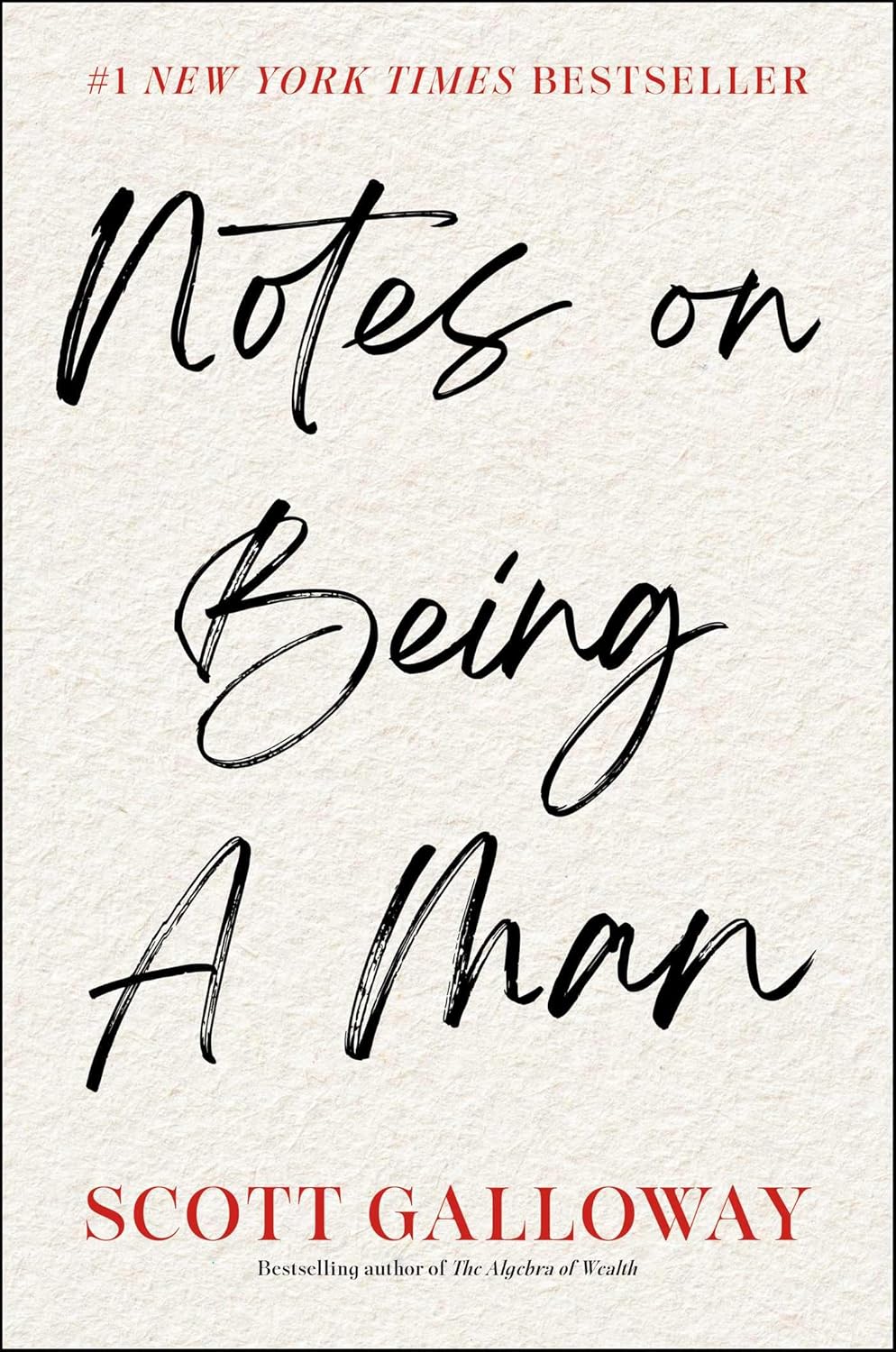
A brutally honest guide addressing the mental health crisis affecting young men today
“Notes on Being a Man” doesn’t hide behind metaphor or niche appeal. This isn’t a basketball book, but it’s absolutely relevant to our audience at Hoopwrld—coaches, parents, and young men navigating the complexities of growing up in 2025.
While we typically focus on the game, player development, and basketball culture, this book addresses something bigger: the mental health crisis affecting millions of young men but remains largely unspoken in mainstream discourse.
The Courage to Say What Others Won’t
Writing the Book Nobody Wanted to Publish
Let’s be clear about something upfront: writing this book took courage. Real courage.
In today’s cultural climate, acknowledging that young men are struggling—that boys and young men specifically need help—is often met with immediate pushback, criticism, or accusations of undermining other groups. The author didn’t have to take this risk. They could have written a safer book, one that wouldn’t invite controversy or potential backlash.
Instead, they chose honesty over comfort. They chose to name the problem explicitly, even knowing that doing so would make some people uncomfortable, angry, or dismissive. That’s leadership. That’s integrity.
This book exists because someone had the courage to say: young men are hurting, the data is undeniable, and we’re failing them by staying silent. That willingness to speak uncomfortable truth—especially when it’s easier to look away—is what separates this book from countless others that play it safe.
The author isn’t grandstanding or seeking attention. They’re addressing a crisis that demands our attention, regardless of how unpopular or controversial that conversation might be. That takes guts.
Understanding the Crisis Facing Young Men Today
The statistics are staggering. Young men are experiencing unprecedented rates of:
- Academic disengagement
- Social isolation
- Anxiety and depression
- Identity struggles and lack of purpose
They’re navigating challenges that previous generations didn’t face—or at least didn’t face with the same intensity and visibility in the age of social media and constant comparison.
Yet acknowledging this reality has become controversial, as if supporting young men somehow diminishes support for others. “Notes on Being a Man” rejects that false choice entirely. The book makes clear from the outset: this isn’t about competing for sympathy or resources. It’s about recognizing an epidemic happening in plain sight and doing something about it.
The author had every reason to avoid this topic. They chose to confront it head-on instead. That matters.
What Makes This Book Different
Uncomfortable Truths About Modern Masculinity
What sets this book apart is its refusal to soften the message. The content is direct, at times uncomfortable, and unapologetically real. It tackles questions that young men are grappling with daily but rarely hear addressed honestly:
- What does masculinity actually mean in 2025?
- How do you build identity in a world of constant social media comparison?
- What’s the difference between strength and emotional suppression?
- How do you ask for help when everything around you says that’s weakness?
These aren’t abstract philosophical exercises. For a generation of young men—whether they’re student athletes, in the classroom, or just trying to figure out who they are—these are survival questions.
The book doesn’t offer easy answers or feel-good platitudes. Real talk about mental health, purpose, relationships, and what it actually takes to become a man requires honesty—the kind that makes some readers uncomfortable. That’s the point.
Speaking Truth in a Risk-Averse Culture
Most authors, publishers, and platforms avoid topics like this. Too controversial. Too divisive. Too much potential for misinterpretation or backlash. The result? A generation of young men who desperately need guidance but find only silence, generic advice, or messaging that doesn’t speak to their specific experience.
This author broke that pattern. They wrote the book that needed to exist, not the book that would guarantee universal approval. In doing so, they’ve given voice to millions of young men who’ve felt invisible, forgotten, or told their struggles don’t matter.
That’s not just courage. That’s service.
Why This Matters for Athletes, Coaches, and Parents
Beyond Basketball: Developing the Whole Person
At Hoopwrld, we’ve always believed that basketball is about more than performance metrics. It’s about youth development—not just as players, but as people. The young men in our gyms are facing pressures that extend far beyond the court:
- Locker room conversations about identity and belonging
- Mental battles during tough games and seasons
- Identity questions that come with success and failure
- Pressure from social media and peer comparison
All of it connects to the larger question of what it means to grow up as a young man today.
This book speaks directly to that reality. It meets young men where they are while challenging them to become more. And it does so without apology or equivocation—because the author understood that young men deserve better than watered-down platitudes.
Turning Insight Into Action: The Legacy Basketball Journal
A Mental Health Tool for Young Athletes
Reading about these challenges is one thing. Having tools to navigate them is another.
This is why we believe the Legacy Basketball Journal is an essential companion to this book—and to any young player’s development. The journal isn’t about tracking stats or recording practice drills. It’s a mental health tool designed specifically for young athletes.
Why Young Men Need Journaling and Reflection
Young men need space to process what they’re experiencing. They need to:
- Separate their identity from their performance
- Develop self-awareness and emotional intelligence
- Reflect on who they’re becoming—not just what they’re achieving
- Build healthy coping mechanisms for stress and pressure
The Legacy Basketball Journal provides that space. It’s where the concepts in “Notes on Being a Man” become daily practice. Where abstract ideas about purpose, growth, and resilience become concrete habits. Where young players learn that taking care of their mental game is just as important as perfecting their jump shot.
For coaches, it’s a bridge to deeper conversations with your players about mental health and character development.
For parents, it’s insight into what your son is thinking and feeling during critical developmental years.
For young men themselves, it’s a tool that says: your inner world matters, and working on it isn’t weakness—it’s essential leadership.
Who Should Read This Book
Essential Reading for Multiple Audiences
For young men and teen boys: A roadmap through territory that feels increasingly difficult to navigate, with practical guidance on building identity and resilience
For coaches and youth mentors: Understanding the unique mental health pressures facing this generation and how to support young athletes holistically
For parents of boys: Insight into what your sons are experiencing and the language to bridge an often-widening communication gap
For educators and anyone working with young men: A wake-up call about what’s at stake if we continue ignoring the adolescent mental health crisis
For anyone who values truth over comfort: A reminder that courage still matters, especially when addressing topics others avoid
Why This Book Matters Now
Addressing the Silent Epidemic
There’s a generation of young men who’ve been told to figure it out on their own—that asking for help is weakness, that struggling means failure, that real men don’t need emotional support. The consequences of that messaging are everywhere:
- Rising suicide rates among young men
- Increasing social disconnection and loneliness
- Academic underperformance and disengagement
- Lack of purpose and direction
“Notes on Being a Man” offers an alternative narrative. One that says:
- Strength includes vulnerability
- Purpose requires self-reflection
- Becoming a man is a process, not a destination
- Nobody should have to navigate adolescence alone
This isn’t generic self-help repackaged. It’s cultural commentary that refuses to look away from what’s broken. And for a generation of young men searching for authentic guidance in a world that seems to have forgotten them, that matters immensely.
The author could have written a safer book. They chose to write an important one instead. That decision—to prioritize impact over approval—is exactly the kind of courage they’re asking young men to develop.
When paired with practical tools like the Legacy Basketball Journal, the impact multiplies. Theory meets practice. Awareness becomes action. Young men don’t just read about personal growth—they have a system to actually achieve it.
The Verdict: A Must-Read for 2025
Why This Book Is Essential
“Notes on Being a Man” is essential reading—not just for our basketball community, but for anyone invested in youth development and the well-being of young men. It acknowledges an uncomfortable truth: we’re failing a generation of boys, and pretending otherwise helps no one.
The book won’t appeal to everyone. Its directness will make some uncomfortable. Its willingness to name the problem explicitly—to say that young men need help without qualifying or apologizing for it—will inevitably draw criticism.
But that’s exactly why it matters.
The author knew this going in. They wrote it anyway. They chose truth over popularity, substance over safety, real impact over easy approval. In a culture that increasingly rewards playing it safe and avoiding controversy, that kind of courage is rare—and invaluable.
Rating: Must Read
In an era of carefully curated content and risk-averse messaging, “Notes on Being a Man” stands out for its willingness to say what needs to be said. Some books entertain. Some inform. This one might actually change lives—and save some too.
For coaches developing young athletes. For parents raising sons. For young men trying to figure out who they want to become. For anyone who believes that speaking difficult truths with compassion matters more than comfortable silence.
This book matters.
And when you finish reading it, give your player the Legacy Basketball Journal. Because understanding the problem is the first step. Having tools to address it is how real change happens. And having the courage to acknowledge both—that’s how we actually help this generation.
Take Action: Resources for Young Men
At Hoopwrld, we’re committed to holistic player development. “Notes on Being a Man” aligns with that mission—and we believe it deserves your attention. Pair it with the Legacy Basketball Journal, and you’re not just reading about change—you’re creating it.
Related Resources:
- Legacy Basketball Journal – Mental health tool for young athletes
- Youth athlete development programs
- Coaching resources for character building
- Parenting resources for raising boys
Tags: young men mental health, teen mental health, parenting boys, coaching youth sports, masculinity, adolescent development, sports psychology, youth basketball, character development, emotional intelligence, courageous leadership