A Conversation with Michael K. Semiao, Author of Courts of Reflection
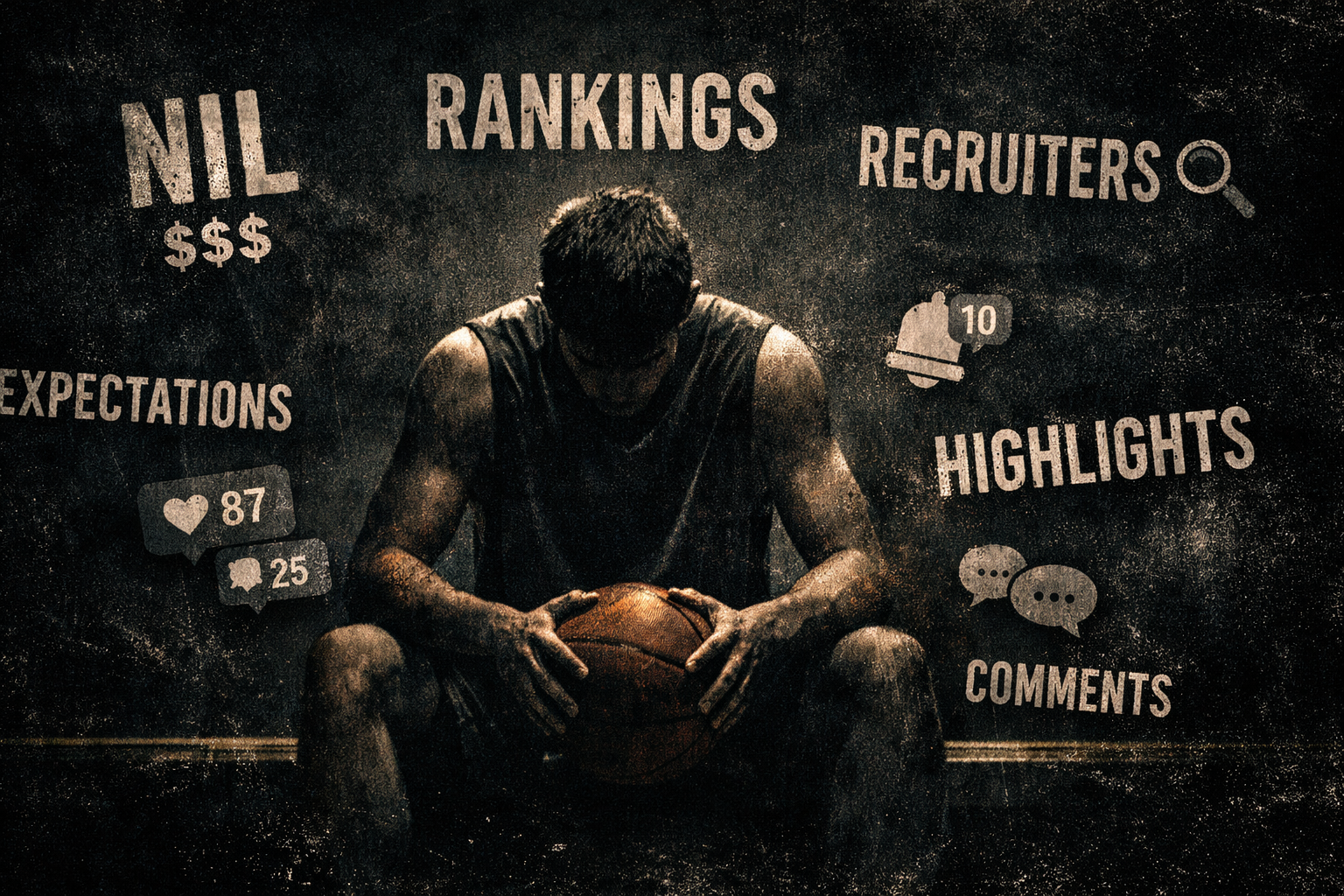
You’ve got practice after school. Homework waiting at home. Your coach expects you to lead. Recruiters are watching your highlights. Your timeline is blowing up with comments — some love, some noise. And somewhere underneath all of it, you’re trying to figure out who you even are.
That’s the reality for high school hoopers right now. The pressure isn’t new — but the volume is. Social media means your game is public before you’re ready. NIL means your value feels like a number. Group chats, rankings, highlight culture — it’s a lot to carry. And most players carry it without saying a word.
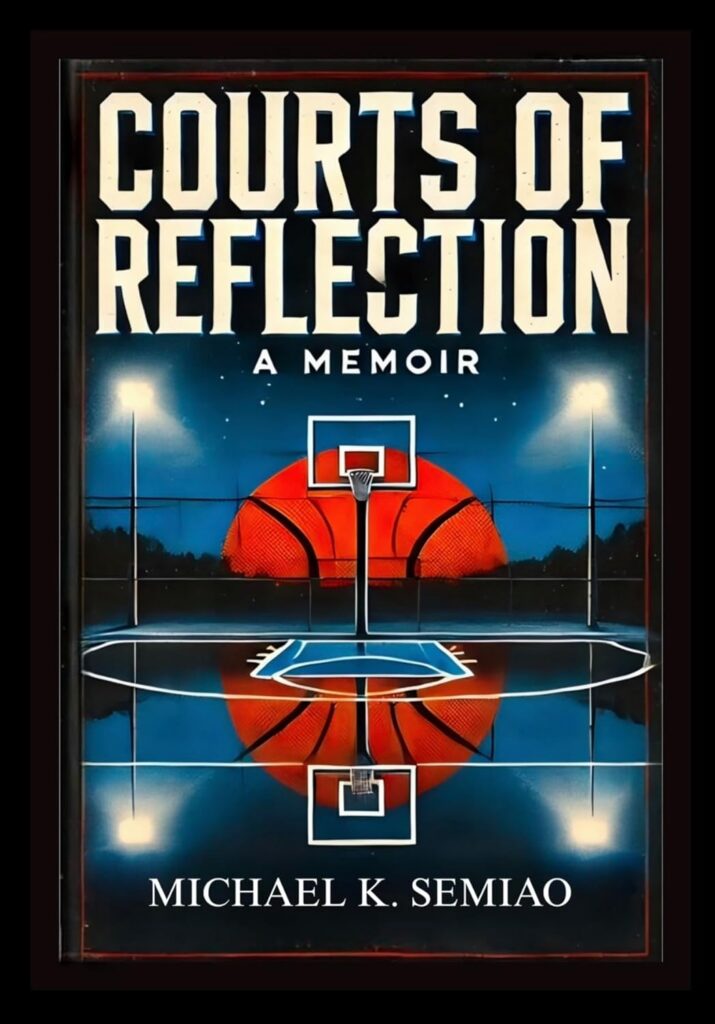
Michael K. Semiao knows that feeling. As a driven high school athlete who performed under pressure while quietly fraying on the inside, he learned early how to look composed while struggling alone. Years later, he turned that experience into Courts of Reflection — a book that finally asks the questions the basketball world avoids.
We sat down with Semiao to talk about what high school players are really going through, why emotional detachment is a red flag that gets misread, and what any young athlete carrying more than they show can do right now.
The Q&A
Q1. When you were in the middle of your high school career, did you recognize what you were going through emotionally, or did that awareness only come later?
I knew something was wrong, but I didn’t understand it emotionally. I felt stress and pressure, and I believed it was affecting my play, but I saw it as something I just had to push through. By then, that level of stress had become normal to me. I accepted it as part of being the player everyone expected me to be.
The emotional awareness — understanding that what I was experiencing wasn’t just performance pressure but something deeper — only came much later, when I had the distance and language to look back on it honestly.
Stress can become so normal that you stop noticing it. Just because you’ve adapted doesn’t mean you’re okay.
Q2. High school is when recruiting pressure, academic expectations, and team leadership all collide at once. If you could go back and give yourself one piece of advice for that specific moment, what would it be?
That’s a hard question, because the version of me at that point was almost entirely driven by ambition and expectation. I believed pushing harder was always the answer.
If I could reach him, I would say this: Slow down. Take care of yourself as seriously as you take care of your performance. Rest is not weakness. Asking for support does not reduce who you are as a player.
I thought looking after myself meant working more. What I needed was permission to be a person and an athlete.
Working on yourself isn’t separate from working on your game — it is the work. Rest, honesty, and asking for help are part of the grind.
“The strongest athletes are not the ones who carry everything alone — but the ones who stay whole while they pursue excellence.”
— Michael K. Semiao, Courts of Reflection
Q3. You write about confidently performing while feeling the opposite internally. What’s one sign that a teammate, parent, or coach should look for in a player who is carrying more than they’re showing?
One sign I would be especially sensitive to is emotional detachment — when a player suddenly seems indifferent or less connected to the game or the people around them.
People often misread that kind of withdrawal as attitude or lack of effort. In my experience, it can be the opposite. It can be a young athlete protecting themselves when the internal pressure has become too heavy to carry openly.
That’s why ongoing, genuine check-ins matter — not only when something looks wrong, but as part of really knowing the player or child. When someone who is usually engaged pulls away, that shift itself is the signal.
If a player who used to be locked in suddenly goes quiet or checked out, don’t assume attitude — ask what’s really going on.
Q4. In today’s world of NIL, social media highlights, and constant recruiting exposure, do you think it’s harder for high school players to ask for help — and what would you say to a player who feels like admitting their struggle would cost them their opportunity?
Yes, but with an important caveat. Asking for help has always been difficult for young athletes. In my era, the pressures came from expectations, reputation, and performance. Today, those same forces exist alongside social media visibility and recruiting exposure. The sources may look different, but the internal experience for the player is very similar.
When a young athlete feels they must carry everything alone, it often erodes their sense of self-worth. They believe that showing struggle will reduce their value or threaten their opportunities. That belief is powerful — and untrue.
To a high school player who feels this way: asking for help does not cost you your future. Silence costs far more.
Your struggle doesn’t make you less valuable. Asking for help when you need it is a sign of self-awareness — one of the most underrated skills in the game.
Q5. You eventually told your story through writing. For a 16- or 17-year-old who isn’t ready to talk to anyone yet, what’s one thing they can do today to process what they’re carrying?
If you’re not ready to talk to anyone yet, start by giving yourself a private place to be honest — even if it’s just with you. Write a few sentences in a journal, record a voice note on your phone, or simply name what you’re feeling without trying to fix it. Journaling in particular has been one of the most powerful tools I’ve seen young athletes use — not to solve anything, but to get it out of their head and onto the page where it becomes something they can actually look at.
For a long time, I didn’t understand what I was carrying because I never slowed down enough to notice it. The first step in caring for yourself is recognizing your own experience as real and worth paying attention to. You don’t have to explain it to anyone yet. Just acknowledging it is a beginning.
You don’t need to be ready to talk to start processing. A journal, a voice memo, even just naming what you feel — that counts. That’s the first step.
A Note for Parents
In his additional reflections, Semiao has a direct message for the adults in a young athlete’s life:
“The most protective message a parent or coach can communicate is simple and consistent: you are more than what you do here.”
— Michael K. Semiao, Courts of Reflection
He writes about learning to see beyond performance — that the athletes who appear most composed are sometimes the ones carrying the most. Withdrawal, detachment, indifference toward things that once mattered: these are signals that often go unread.
“When identity becomes too tightly linked to performance, even unintentionally,” Semiao writes, “the athlete can believe their value rises and falls with results. That belief is heavy, and young players rarely have the language for it.”
The freedom to struggle without losing yourself — that, he argues, is what protection actually looks like.
Courts of Reflection is available now.
If this conversation resonated with you — share it with a player, a parent, or a coach who needs to hear it.
— Hoopwrld