
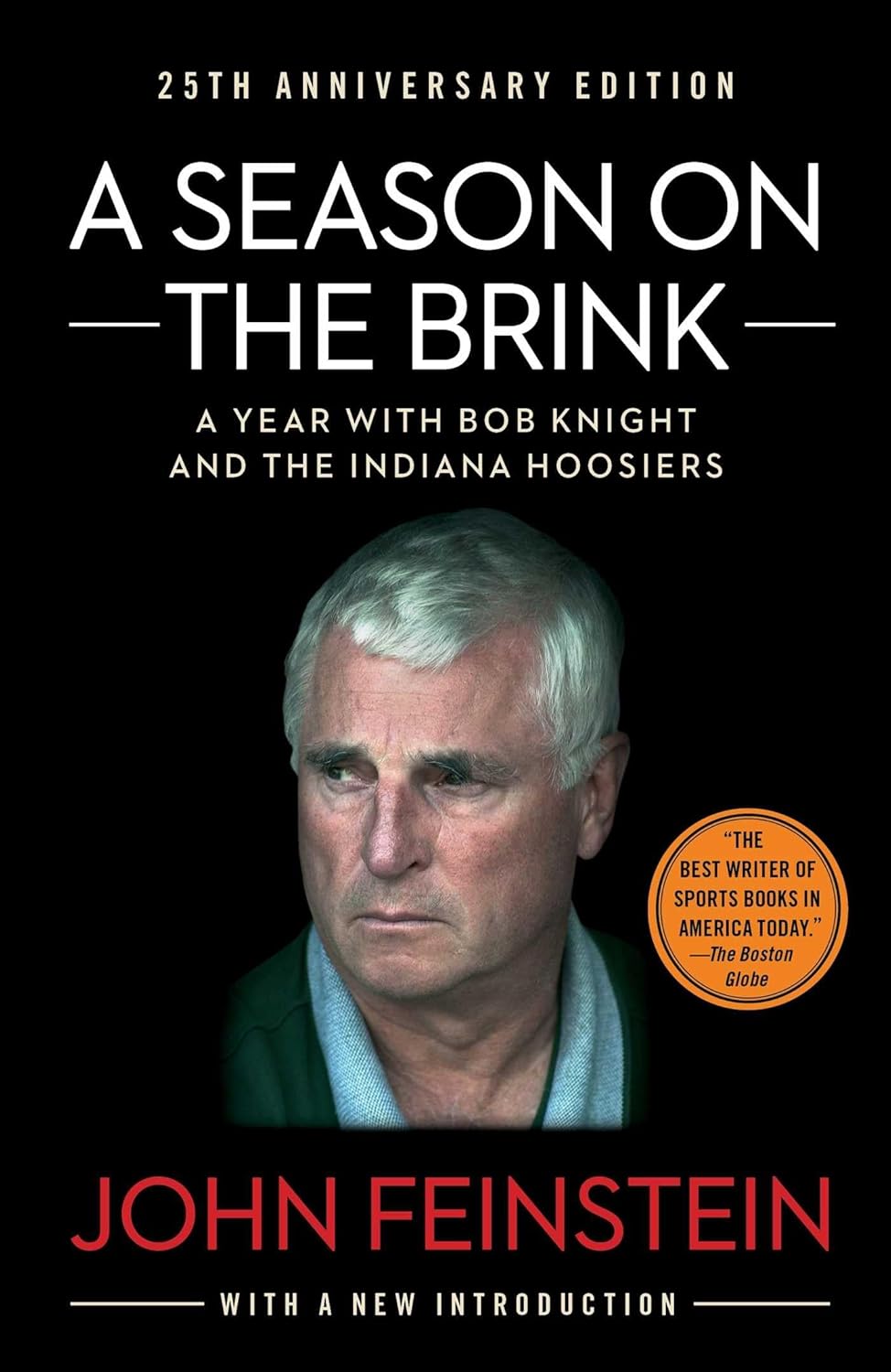
In today’s NIL era where player development takes a backseat, John Feinstein’s classic book reveals what real coaching looks like
Buy now – link.
Bobby Knight: The Basketball Development Legend
Before social media highlight reels and NIL deals transformed college basketball, Coach Bob Knight built the Indiana Hoosiers into a national powerhouse through brutal honesty and uncompromising standards. When journalist John Feinstein gained unprecedented behind-the-scenes access to Knight’s 1985-86 Indiana program, he captured a coaching philosophy that’s increasingly rare today: telling players what they NEED to hear, not what they WANT to hear.
Knight’s approach wasn’t about being liked – it was about developing complete basketball players through:
- Relentless Preparation: Film study and strategic preparation that’s disappeared in today’s game-heavy schedules
- Basketball IQ Development: Teaching players to think, not just react
- Mental Toughness Training: Building resilience through demanding practices
- Unfiltered Feedback: Identifying weaknesses without sugar-coating them
- Total Accountability: No excuses, no participation trophies
Indiana’s Historic Basketball Dynasty Under Knight
Knight’s record speaks volumes: 662-239 (.735) at Indiana with three NCAA championships (1976, 1981, 1987), 11 Big Ten titles, and five Final Four appearances. His 1976 team remains the last Division I men’s squad to finish a season undefeated (32-0).
The Hoosiers under Knight became an NBA talent factory that produced:
- Isiah Thomas – Hall of Famer, NBA champion who called Knight “the most influential person in my life outside my mother”
- Steve Alford – Sweet-shooting guard who became an NBA player and successful coach
- Quinn Buckner – Champion at both college and NBA levels
- Kent Benson – First overall pick in the 1977 NBA Draft
- Mike Woodson – Successful NBA player who returned to coach his alma mater
- Calbert Cheaney – Big Ten career scoring leader
- Keith Smart – Hit the legendary game-winning shot in the 1987 championship game
And Indiana’s NBA pipeline continues today with current pros:
- OG Anunoby, New York Knicks – Elite 3-and-D wing who helped Toronto win an NBA championship
- Thomas Bryant, Indiana Pacers – High-energy center who returned to rep his college state professionally
- Trayce Jackson-Davis, Golden State Warriors – Explosive forward carrying the Indiana legacy in the Bay
- Kel’el Ware, Miami Heat – Athletic big man developing his skills in South Beach
The Development Disconnect in Modern Basketball
Today’s basketball landscape prioritizes games over practice, highlights over fundamentals, and comfort over growth. Knight’s methods seem harsh by modern standards, but produced extraordinary results:
- AAU circuits emphasize showcase tournaments over skill development
- NIL deals reward social media presence over basketball fundamentals
- Transfer portal culture encourages players to leave rather than work through challenges
- Coaches fear losing recruits by delivering honest feedback
Knight’s 1985-86 team – the one Feinstein documented during their struggles – went on to win the national championship the VERY NEXT SEASON. That’s what real player development looks like.
The Chair Throw Explained
On February 23, 1985, just five minutes into a game against rival Purdue, Knight exploded after a series of calls against Indiana. After receiving a technical foul, he grabbed a red plastic chair from the bench and hurled it across the court, earning an ejection and cementing his reputation as basketball’s most volatile sideline presence.
While Knight’s chair-throwing demonstration reflected his excessive intensity, it came from the same place as his coaching philosophy – an obsessive commitment to excellence and refusal to accept mediocrity. The outburst became such an iconic moment that 40 years later, Indiana still commemorates it during games against Purdue.
The Takeaway for Today’s Players
When choosing your next basketball environment, ask: Do you want someone who’ll tell you what you want to hear, or what you need to hear to improve?
Knight’s gift wasn’t just basketball brilliance – it was brutal honesty delivered without concern for feelings. He understood what many coaches today have forgotten: real growth happens when someone cares enough to tell you the uncomfortable truth about your game.
“A Season on the Brink” isn’t just basketball history; it’s a blueprint for player development that modern hoopers should study to understand what it takes to maximize potential.
The Journalist Who Captured It All
The sports world recently lost a legend when John Feinstein passed away in March 2025 at age 69. As one of America’s most decorated sports journalists, Feinstein wrote 48 books (23 making the New York Times bestseller list), won the Basketball Hall of Fame’s Curt Gowdy Media Award in 2013, and earned induction into the National Sportscasters and Sportswriters Hall of Fame.
His masterpiece remains his first book—”A Season on the Brink“—where he scored unprecedented access to Bobby Knight’s Indiana program. Like Knight himself, Feinstein wasn’t afraid to tell hard truths, and together they created a basketball classic that continues to show young players what real development looks like.
Buy now – LINK.