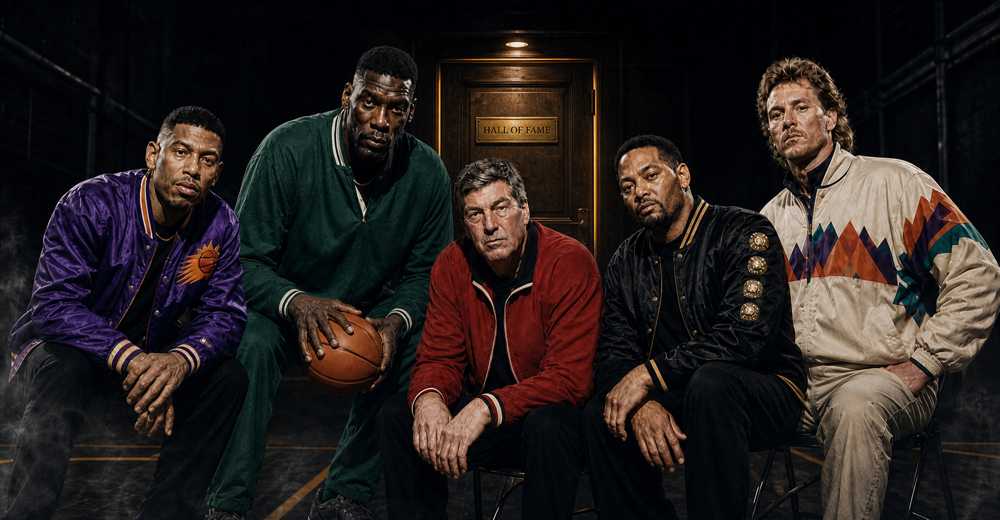


Why the best players in basketball don’t just play different—they look, move, and carry themselves differently
The Invisible Edge That Changes Everything
Before Anthony Edwards touches the ball, defenders already feel him. Before Jaylen Brown makes his move, opponents sense the danger. This isn’t about trash talk or theatrics—it’s about aura, that unmistakable presence that separates elite competitors from talented players who never quite break through.

Michael Jordan and Kobe Bryant didn’t just beat you with skill. They broke you with their presence. Opponents saw them and felt defeat creeping in before the ball was even tipped. That’s the power of confidence made visible.
But here’s what most young hoopers miss: Confidence isn’t just internal. It’s communicated through every single thing about how you show up.
The Four Pillars of Basketball Presence
1. Body Language: Your Silent Statement
Your posture, movements, and physical presence tell a story before you even touch rock.
What elite body language looks like:
- Chest up, shoulders back when you walk in the gym—you own that space
- Decisive, purposeful movements in warm-ups—no wasted motion
- Aggressive stance on defense—you’re a problem, and your body shows it
- No dropped shoulders after mistakes—immediate reset, no cap
- Walking with purpose between plays, not shuffling like you’re unsure
- Eye contact that says “I belong here and you know it”
What kills your aura:
- Slouching or looking at the ground like you’re apologizing for existing
- Tentative, uncertain movements that scream “I don’t believe yet”
- Visible frustration that lingers—you’re still thinking about two plays ago
- Body language that apologizes for taking space on the court
- Looking away when coaches or defenders challenge you
Watch Ant after he misses. There’s no hang time on disappointment. He’s already moving to the next play, body screaming “I’m still the most dangerous player on this court, and we both know it.”
2. Communication: The Voice of a Competitor
How you talk—to coaches, teammates, and opponents—reveals everything about your mental game.
Elite communication patterns:
- Calling out defensive assignments with authority—not asking, telling
- Demanding the ball in your voice and words when you’re cooking
- Encouraging teammates LOUD after their mistakes—that’s leadership
- Responding to coaching with “yes coach” and immediate action, not excuses
- Setting the verbal tone in huddles and timeouts—your voice matters
- Controlled, intentional words even when it’s heated—never lose your composure
Communication that undermines you:
- Quiet, passive response to coaching—coaches remember who doesn’t engage
- Complaints or excuses after missed plays—nobody respects that
- Silent when your team needs vocal leadership—you’re invisible
- Tentative call-outs that teammates ignore because you don’t sound sure
- Defensive or argumentative tone with coaches—you think you’re tough, but you’re just scared
Jaylen Brown doesn’t just play hard—he sounds like a problem. His communication during games projects certainty, demands respect, and sets a standard his teammates gotta follow.
3. Intensity: The Energy That Intimidates
Talent might get you noticed. Intensity gets you feared.
What maximum intensity looks like:
- First one in every drill, last one out—no discussion
- Sprinting between drills while others jog—that gap matters
- Diving for loose balls in practice like it’s the championship
- Challenging the best player on your team daily—you want that smoke
- Visible frustration with your own mediocrity, not others’
- Competing in everything—shooting drills, conditioning, film study, everything
What fake intensity looks like:
- Going hard only when coaches watch—they see through that
- Intensity in games but coasting in practice—you’re not serious
- Loud without substance—all talk, inconsistent action, no follow-through
- Competing only when you’re winning—that’s soft
- Energy that disappears when things get difficult—exactly when it matters most
Kobe’s intensity wasn’t a switch he flipped for games. It was his identity. Those 4 AM gym sessions, that obsessive film study, that refusal to accept anything less than his absolute best—that’s what made opponents fear him before tip-off. He was different. Period.
4. The Chip on Your Shoulder: Controlled Anger as Fuel
Every elite player has something to prove. They’ve been doubted, overlooked, or straight up disrespected. They use it.
How to channel your chip productively:
- Remember every single time someone doubted you—keep receipts
- Write down who didn’t believe in you—that list is fuel
- Use past failures as fuel, not anchors that hold you back
- Play like you’re proving someone wrong every single possession
- Let doubters inspire relentless preparation—make them regret it
- Channel anger into lockdown defense and killer scoring—productive rage
The chip isn’t about being angry at people. It’s about being hungry to prove them wrong, to show them they missed something, to make them regret not betting on you when they had the chance.
When Confidence Feels Fake: The Brutal Truth About Building Aura
Let’s keep it a buck: If you don’t have this confidence right now, trying to project it feels scary as hell.
You’re worried you’ll look stupid. That you’ll talk big and play small. That teammates will laugh at you. That the aura won’t match your ability. That you’ll get exposed.
Here’s what you need to understand: Every player who has “it” now once felt exactly like you do. Every single one.
Anthony Edwards wasn’t born with that swagger. He built it through:
- Repetition that created real confidence in his skills—reps don’t lie
- Forcing himself to act confident before he felt it—fake it till you make it is real
- Learning that confidence is a practice, not a feeling—it’s a choice
- Failing publicly and coming back anyway—that’s courage
- Deciding his potential mattered more than his fear—scary but necessary
The Confidence-Building Process
Week 1-2: Act the Part Start with your body language. Walk into the gym like you belong there, even if you don’t believe it yet. Stand tall in drills. Make eye contact with coaches. Your mind follows your body—science backs this.
Week 3-4: Add Your Voice
Start calling out one defensive assignment per possession. Doesn’t matter if your voice shakes. Do it anyway. Say “good shot” to a teammate once per practice. Respond to coaching with immediate, vocal acknowledgment. Build the habit.
Week 5-8: Bring Intensity Sprint to every drill. Dive for one loose ball per practice—just one, commit to it. Challenge yourself to defend the best player. Your intensity will feel forced at first. That’s fine. Forced intensity still builds real skills and respect.
Week 9-12: Embrace the Chip Write down everyone who doubted you. Review it before every practice and game. Use their skepticism as fuel. Not to be angry at them, but to be unstoppable for yourself. That’s the difference—it’s about you, not them.
The Calls, The Buckets, The Respect: What Changes
Here’s the reality nobody talks about: Referees, coaches, and opponents respond to confidence. Facts.
When you carry yourself like an elite player:
- Refs give you benefit of the doubt because you look like someone who earns calls—your reputation precedes you
- Coaches trust you in big moments because your presence says you can handle pressure
- Teammates find you because your energy makes them believe—they want what you have
- Opponents hesitate because your aura makes them second-guess—they’re already beaten mentally
This isn’t fair. It’s not right. But it’s real as hell. Two players with identical skills get different treatment based on how they carry themselves. The one with aura gets the whistle. Gets the last shot. Gets the respect.
That’s just how it goes.
Building Your Legacy Through Confidence
Your basketball legacy isn’t just about stats and wins. It’s about who you become through the game.
The confidence you build on the court—the ability to project certainty, lead vocally, compete with intensity, and channel adversity—all of this translates to everything else in life. Business, relationships, challenges, setbacks—the aura you develop as a hooper shapes the person you become.
Your legacy is built through:
- The days you showed up when you didn’t feel ready—but you came anyway
- The moments you spoke up when your voice shook—courage isn’t absence of fear
- The times you projected confidence you hadn’t earned yet—faith in your future self
- The failures you faced without letting your body language break—resilience is visible
- The decision to become the player you wanted to be—not someday, today
Elite players understand this: Confidence is both the tool that shapes their game and the legacy they build through competition.
The Legacy Basketball Journal: Document Your Transformation
Want to track your growth from uncertain player to confident competitor? Use journaling to build self-awareness and accountability. No cap, this works.
Daily confidence journal prompts:
Before practice/games:
- What does elite body language look like today?
- What will I communicate vocally to my team?
- What intensity will I bring that intimidates?
- What am I proving today? Who am I proving wrong?
After practice/games:
- When did my body language slip? When was it elite?
- Rate my vocal leadership 1-10. What specific moment showed growth?
- Did I bring maximum intensity? What’s my evidence?
- What moment today built my confidence legacy?
Weekly reflection:
- This week, I acted confident when I felt…
- My aura grew when I…
- Next week, I’ll push my confidence by…
- The player I’m becoming is…
Document the transformation. Track the moments your confidence felt fake and you did it anyway. Record when teammates responded to your energy. Write down when coaches trusted you more. Your journal becomes proof that you’re building something real.
The Elite Mindset: This is Non-Negotiable
Here’s what separates players who make it from those who don’t:
Elite players decide that confidence, body language, communication, and intensity are non-negotiable parts of their game. Not extras. Not bonuses. Not things they’ll add “when they feel more comfortable.”
Core requirements. Bottom line.
They understand that talent is common. Elite body language is rare. Vocal leadership is rare. Relentless intensity is rare. The combination is what makes you unforgettable.
Your Challenge: 30 Days of Aura-Building
Commit to this for one month. No excuses:
Daily non-negotiables:
- Walk into the gym with elite body language—own it
- Make one vocal call-out per possession on defense—every possession
- Sprint to at least one drill when others jog—stand out
- Journal for 5 minutes about your confidence growth—track it
- Review your “doubters list” before competing—fuel up
Weekly check-in:
- Film yourself and watch your body language—you’ll see what others see
- Ask a teammate: “On a scale of 1-10, how confident do I seem?”—get real feedback
- Record one moment where you acted more confident than you felt—celebrate that
The Truth About Becoming Feared
Michael and Kobe weren’t born with aura. Ant and Jaylen didn’t wake up intimidating.
They decided to become that player. Then they did the uncomfortable work of projecting confidence before they fully felt it. They acted like killers until they became killers.
You have the same choice. Same 24 hours. Same opportunity.
Your talent might still be developing. Your skills might still be growing. But your body language, communication, intensity, and mindset can change today. Right now.
The player you want to become is waiting. The aura that makes defenders uncomfortable, coaches believe, and teammates follow—it’s built through daily decisions to show up differently.
Stop waiting to feel confident. Start acting like the player you’re becoming.
Your legacy isn’t built on the days you felt ready. It’s built on the days you showed up with aura anyway—scared but committed, unsure but unwavering.
That’s the difference. That’s what separates.
Choose to be different. Choose to be uncomfortable. Choose to be elite.
Ready to document your transformation from uncertain player to confident competitor? The Legacy Basketball Journal helps you track your mental game, build self-awareness, and create the elite mindset that changes how you show up. Your confidence journey starts with one decision: Today, I show up different.