

World Basketball Day 2025: History, Global Impact & Basketball Legends | Hoopwrld
Celebrate World Basketball Day December 21st with stories of Victor Wembanyama, Dirk Nowitzki, Giannis, and Jeremy Lin. Discover basketball’s global impact and the new Legacy Basketball Journal in Spanish, French & German.
On December 21, 1891, in Springfield, Massachusetts, Dr. James Naismith invented basketball by nailing a peach basket to the gymnasium wall. What started as a simple winter activity has become a global phenomenon celebrated as World Basketball Day—recognized by the United Nations and played by 450 million people worldwide across every continent from Paris to Athens, Berlin to Taipei, Santo Domingo to Sydney.
How Basketball Builds Peace: Full Court Peace Organization
The power of basketball to unite diverse communities isn’t just theory—it’s being proven every day by organizations like Full Court Peace. Founded by Mike Evans, a Hamilton College graduate and Harvard-trained educator, Full Court Peace demonstrates exactly what the UN celebrates about basketball: its unique ability to bridge divides and create understanding.
Evans’ journey began in 2006 when he was playing semi-professional basketball in Belfast, Northern Ireland. Working at a basketball clinic, he witnessed the harsh reality of sectarian violence still dividing the city. After meeting the Dalai Lama during a world peace tour, Evans watched as two young girls—one Protestant, one Catholic—got into a fight moments later. These kids, at 15 years old, were on the brink of either becoming productive citizens or joining paramilitary organizations.
Evans saw an opportunity. He recruited players from both Protestant and Catholic high schools to form a single team, the Belfast Blazers, with one condition: to travel to America, they had to play together. Players who wouldn’t speak to each other at first slowly began communicating through the game. By season’s end, kids who had been separated by literal walls were texting, taking photos together, and forming genuine friendships.
Today, Full Court Peace works throughout Connecticut, New York, and internationally in places like Cuba, the Dominican Republic, Puerto Rico, and the Azraq Refugee Camp in Jordan. The organization follows one simple rule: let locals lead. Whether working in South Jamaica Houses in Queens or refurbishing courts in Norwalk, Full Court Peace provides resources—balls, sneakers, uniforms, court repairs—to help communities turn ideas into reality.
Victor Wembanyama and French Basketball: From Tony Parker to the Olympics
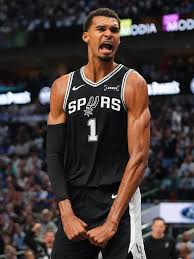
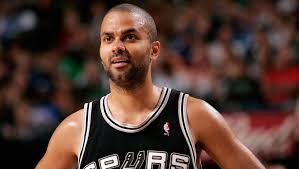
France has emerged as one of basketball’s most important international markets. Tony Parker’s championship pedigree with the San Antonio Spurs paved the way for the current generation led by Victor Wembanyama.
Wembanyama, the 7’4″ phenomenon from Le Chesnay, chose to develop his game in France’s professional system rather than jumping to American prep schools. That decision paid off when he became the first French player selected first overall in the NBA draft in 2023. His mother was a national team player and coach. His maternal grandfather played professionally. Basketball runs through French families like this, passed down with the same care as traditions.
At the Paris 2024 Olympics, Wembanyama led France to a silver medal, playing with such intensity that he left blood on his jersey during the semifinal victory over Germany. When asked about the emotional moment, he spoke about wearing the national jersey: “It’s something we all feel as patriots. We love our jersey. We love our country.”
Parker, the six-time All-Star and four-time NBA champion, brought French flair to San Antonio, winning Finals MVP in 2007. His success changed how scouts viewed international talent entirely.
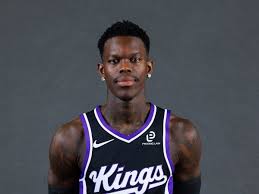
Dirk Nowitzki and German Basketball: Dennis Schröder’s FIBA World Cup Legacy

Dirk Nowitzki didn’t just succeed in the NBA—he fundamentally changed how the game is played. Before Dirk, seven-footers were expected to post up with their backs to the basket. The Würzburg native proved that size and shooting touch could coexist, pioneering the stretch-four position that’s now standard in modern basketball.
But Nowitzki’s legacy extends beyond his 21 seasons with the Dallas Mavericks and his 2011 championship. He proved that international players could be franchise cornerstones, leaders, and champions. His humility and work ethic became the template for success.
Dennis Schröder has carried that torch forward. The Brunswick native led Germany to its first FIBA World Cup title in 2023 and continues to represent German basketball at the highest level wth an impressive win at Eurbobasket 2025. Germany’s development system emphasizes fundamentals, team play, and basketball IQ—qualities evident in every German player who reaches the NBA.
Giannis Antetokounmpo: Greek Basketball and the NBA MVP Journey

Giannis Antetokounmpo’s rise from selling watches on the streets of Athens to becoming a two-time NBA MVP is basketball’s ultimate fairytale. Born to Nigerian immigrant parents in Greece, Giannis and his brothers learned basketball as a pathway to a better life.
When he was drafted 15th overall by the Milwaukee Bucks in 2013, many questioned whether he’d ever contribute. Giannis didn’t just prove doubters wrong—he became one of the most dominant players in history. The “Greek Freak” won back-to-back MVPs in 2019 and 2020, then led the Bucks to their first championship in 50 years in 2021, earning Finals MVP.
His game embodies basketball’s transformative power: raw athleticism combined with relentless improvement, humility paired with confidence, and a deep understanding that success is earned, not given. Giannis still talks about his roots, never forgetting where he came from.
Jeremy Lin and Linsanity: Asian American Basketball History

Jeremy Lin’s journey represents something revolutionary. When the Harvard graduate went undrafted in 2010, conventional wisdom said Asian American guards couldn’t compete at the NBA’s highest level.
Then came February 2012. Playing for the New York Knicks, Lin exploded onto the scene with performances that defied every expectation. He averaged 24.6 points and 9.2 assists during an 11-game stretch that became known as “Linsanity.” He was attacking defenses with an aggressive, dynamic style that challenged every stereotype about Asian American players.
Lin became the first American of Taiwanese or Chinese descent to play in the NBA, and later the first Asian American to win an NBA championship with the Toronto Raptors in 2019. As Lin reflected in his 2025 retirement announcement: “It has been the honor of a lifetime to compete against the fiercest competitors under the brightest lights and to challenge what the world thought was possible for someone who looks like me.”
After his NBA career, Lin returned to his ancestral homeland, playing professionally in Taiwan and leading the New Taipei Kings to a championship in 2025 while earning MVP honors. Playing alongside his younger brother Joseph, Lin came full circle, bringing his legacy back to where his family’s basketball story began.
Why Basketball is a Universal Language: UN World Basketball Day Recognition
What connects Wembanyama’s elegance, Nowitzki’s innovation, Giannis’s determination, Lin’s barrier-breaking courage, and Evans’ peace-building work? Basketball gave them all a platform to show the world who they are.
The United Nations recognized basketball’s unique power when it established World Basketball Day in 2023. The resolution specifically notes that basketball contributes to peace, development, respect for human rights, gender equality, and the empowerment of young people.
Basketball transcends the typical limits of sport. On courts from Berlin to Athens to Taipei to Paris to Belfast, young players speak different languages but understand the same game. A pick-and-roll works the same way everywhere. A well-timed pass creates the same joy in every culture. The swish of a perfect shot sounds identical in every language.
Whether it’s Protestant and Catholic teenagers in Belfast learning to trust each other, refugee girls in Jordan receiving their first basketball, or kids from different Connecticut communities working together to refurbish courts, basketball creates spaces where differences dissolve and commonalities emerge.
How to Build Your Basketball Legacy: Lessons from NBA Stars
For young players reading this, World Basketball Day isn’t just about celebrating the game’s history—it’s about recognizing your place in its future.
Dr. Naismith created basketball to solve a simple problem: keeping students active in winter. He couldn’t have imagined Wembanyama’s defensive wizardry, Dirk’s fadeaway, Giannis’s impossible drives, or Lin’s fearless attacks. He couldn’t have known that his game would help a Greek immigrant’s son become an MVP, give a Taiwanese-American guard the platform to challenge stereotypes, or allow a coach in Belfast to bridge centuries-old divides.
But that’s the beauty of basketball. Each generation adds to the story. Each player from each country brings something new.
The players we’ve discussed didn’t start as stars. Wembanyama was once a tall, awkward teenager learning to control his body. Dirk was a skinny German kid shooting in local gyms. Giannis sold watches on the street. Lin was told he wasn’t athletic enough for the NBA. Evans was a semi-pro player wondering if he could make a difference.
They all shared one thing: they used basketball as a tool for growth, not just as a game to play. They documented their journeys, reflected on their experiences, and constantly worked to understand themselves better as players and people.
Legacy Basketball Journal Now Available in Spanish, French, and German

On this World Basketball Day 2025, we’re proud to announce that the Legacy Basketball Journal—the premier basketball training journal for youth players—is now available in Spanish, French, and German, with additional native languages planned for the future.
We believe in helping hoopers. All hoopers. Around the world.
Basketball’s language may be universal, but personal growth and mental training happen in the language you think in, dream in, and feel in. Whether you’re journaling in English, Spanish (Diario de Baloncesto Legacy), French (Journal de Basketball Legacy), or German (Basketball-Tagebuch Legacy), the Legacy Basketball Journal gives you a structured basketball training tool to:
- Track your basketball progress and set meaningful player development goals
- Reflect on your game challenges and victories
- Build the mental toughness and resilience that separates good basketball players from great ones
- Document your unique basketball journey and player story
- Develop basketball IQ through intentional reflection
Just as Victor Wembanyama’s journey is distinctly French, Dirk Nowitzki’s is unmistakably German, Giannis Antetokounmpo’s reflects his Greek experience, and Jeremy Lin’s embodies his Taiwanese-American heritage, your basketball journey will be uniquely yours. The Legacy Basketball Journal helps you capture that journey in your own words, in your own language—the same mental training approach used by elite basketball players worldwide.
Because basketball’s greatest gift isn’t the trophies or the stats or the recognition. It’s the person you become through the process of pursuing basketball excellence. It’s the discipline you develop, the mental resilience you build, the confidence you earn through dedicated basketball training.
From Springfield to the world, basketball has changed countless lives over 133 years. It started with Dr. James Naismith trying to keep students active in winter. Today, it’s a global phenomenon that unites cultures, breaks down barriers, creates opportunities, and builds peace—celebrated every December 21st as World Basketball Day.
The question isn’t whether basketball will continue to change lives. It’s whether you’ll let it change yours.
On this World Basketball Day 2025, remember: the game that Naismith invented in 1891 is waiting for you to add your chapter to its story. What will yours say?
Frequently Asked Questions About World Basketball Day
When is World Basketball Day? World Basketball Day is celebrated annually on December 21st, commemorating the first basketball game played in 1891.
Why was December 21st chosen for World Basketball Day? December 21st marks the anniversary of the first basketball game played by Dr. James Naismith in Springfield, Massachusetts in 1891.
Who established World Basketball Day? The United Nations General Assembly established World Basketball Day in 2023 through resolution A/RES/77/324, recognizing basketball’s role in promoting peace, development, and unity.
How many people play basketball worldwide? Approximately 450 million people play basketball worldwide, making it one of the most popular sports globally.
What is the Legacy Basketball Journal? The Legacy Basketball Journal is a training journal for youth basketball players, now available in English, Spanish, French, and German to help players track progress, build mental toughness, and document their basketball journey.
Learn more about the Legacy Basketball Journal in English, Spanish, French, and German at Hoopwrld.com. Join youth basketball players around the world who are documenting their journey and building their legacy. Available now for World Basketball Day 2025.
Related Articles:
- [Basketball Journaling for Performance: How Mental Training Unlocks Your Game]
- [Rewire Your Brain, Build Mental Toughness]
- [Dennis Schröder: A Hall of Fame Lock After Historic EuroBasket 2025 Triumph]
- [Mamba Mentality: A Love Letter to the Game]
World Basketball Day December 21, basketball history, international basketball, youth basketball training, basketball journal, basketball mental training, Victor Wembanyama France, Dirk Nowitzki Germany, Giannis Antetokounmpo Greece, Jeremy Lin Linsanity, basketball for peace, Full Court Peace, basketball player development, basketball training journal Spanish French German