
|
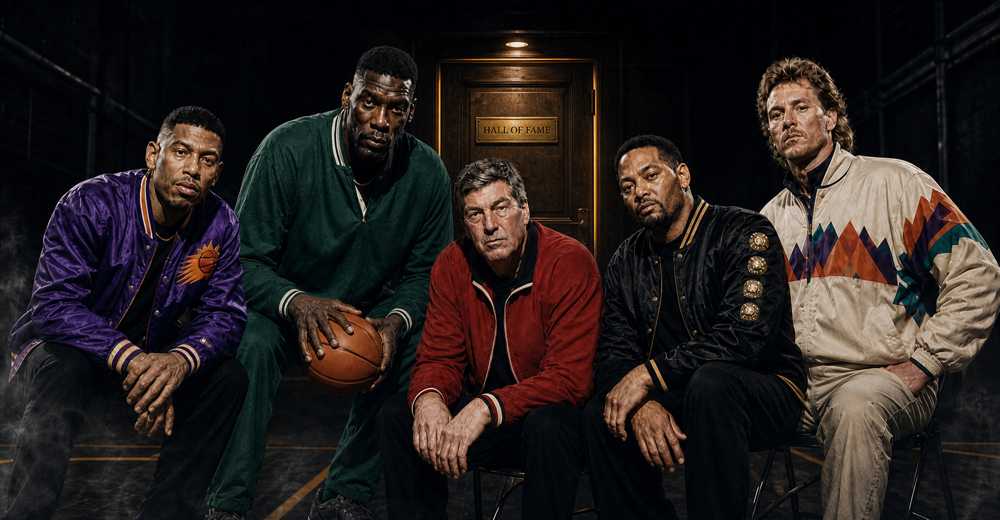
HOOPWRLD — NBA HISTORY The Hall let everybody in. So how are these 5 still outside?Seven rings. A 20-and-10 club with Oscar and Magic. Two NBA titles and three WNBA titles. Five résumés Springfield still can’t explain away. | |||||||||||||||
|
Let’s be real about what the Naismith Basketball Hall of Fame actually is. It’s not a top-50 list. It’s not “did you make an All-NBA team every year.” It’s a museum for the people who changed the game — hoopers, coaches, refs, contributors, men, women, college, pro, international. That’s why the doors are wide. That’s why the classes are nine deep every August. So the “the Hall is too exclusive” argument? Dead. It’s not exclusive. That’s the whole point. Which makes the guys still standing outside look even crazier. The Class of 2026 just got enshrined — Candace Parker, Amar’e Stoudemire, Doc Rivers, Chamique Holdsclaw, Elena Delle Donne, Mark Few, Mike D’Antoni, Joey Crawford, and the 1996 USA Women’s National Team. All earned it. No smoke here. But when you look at that list, then look at who’s still waiting in the hallway — it stops adding up. Here are five. Grab a seat. | |||||||||||||||
|
Case 01 of 05 Robert Horry — 7 rings and no jacketFORWARD · 1992–2008 · ROCKETS, SUNS, LAKERS, SPURS
Say it out loud one time: seven championships. Rockets in ’94 and ’95. Lakers in 2000, 2001, 2002. Spurs in 2005 and 2007. Three franchises. Three different dynasties. Three different eras of NBA basketball. | |||||||||||||||
| |||||||||||||||
|
That’s the whole list. Everybody else with seven-plus rings was riding with Bill Russell in Boston Garden. Horry did his in the free agency era, in the salary cap era, against loaded rosters, on teams that had to actually build it. And he wasn’t a mascot on the end of the bench. 244 playoff games — 4th all-time, behind only LeBron James (302), Derek Fisher (259) and Tim Duncan (251). Big Shot Rob played more postseason basketball than Kobe. More than Shaq. More than Kareem. Then check this, because it’s the tell:
His numbers went up when the lights came on. For sixteen years. Most dudes shrink. He grew. He also owns the record for 7 steals in a single Finals game, hit 7 straight threes without a miss in a 1997 playoff game, and was the first player ever to post 100 steals, 100 blocks and 100 threes in one season. That’s a stretch-four blueprint drawn up in 1996, before anybody had a name for it. | |||||||||||||||
| |||||||||||||||
|
Case 02 of 05 Kevin Johnson — the math is already donePOINT GUARD · 1987–2000 · CAVALIERS, SUNS
KJ’s case isn’t an argument. It’s arithmetic. Career line: 17.9 points, 9.1 assists, 49.3% from the field. A point guard shooting a hair under 50 percent while dropping nine dimes a night is a cheat code. He sits 7th all-time in career assists per game. | |||||||||||||||
Oscar’s in. Isiah’s in. Magic’s in. KJ’s home watching. Same story with the hardware. Five All-NBA selections — four Second Team, one Third Team. Every other eligible guard in NBA history with exactly five All-NBA nods has a bust in Springfield. Every single one. He also won Most Improved Player in 1989 and made three All-Star teams. And don’t try the “he wasn’t built for the moment” angle. In 23 career Conference Finals and NBA Finals games, KJ averaged 19.0 points and 9.0 assists on 48/38/85 splits.
Two Suns-connected names got enshrined in 2026: Amar’e Stoudemire and Mike D’Antoni. The man who built the Phoenix identity they inherited is still on the outside. | |||||||||||||||
|
Case 03 of 05 Bill Laimbeer — hate him, count the rings anywayCENTER · 1980–1994 · CAVALIERS, PISTONS — THEN HEAD COACH, WNBA
Everybody wants to talk about the elbows. Cool. Let’s talk about the résumé. 13,790 points. 10,400 rebounds. Laimbeer was only the 19th player in NBA history to cross 10,000 points and 10,000 rebounds. That club is almost entirely Hall of Famers. He won the 1985–86 rebounding title at 13.1 a night, which snapped Moses Malone’s five-year run as the league’s leading rebounder. Take a second with that. Moses had that title on lock for half a decade and Bill Laimbeer took it from him. He played 685 consecutive games. Four-time All-Star. Two rings, back-to-back in ’89 and ’90 — and the Pistons were only the second team since 1969 to repeat. He also shot 83.7% from the free throw line and dropped six threes in a single Finals game in 1990, tying a record. A 6-11 center. In 1990. When most bigs still thought the three-point line was a suggestion. Laimbeer was a stretch five before the league had the vocabulary. | |||||||||||||||
The Hall of Fame honors the whole game — men’s, women’s, pro, college, coaching. That’s literally the mission statement. And there is nobody with that exact combination of a championship playing career and a championship women’s coaching career sitting outside the building. If they’re waiting for him to apologize for the Bad Boys, they’re gonna be waiting a long time. | |||||||||||||||
|
Case 04 of 05 Shawn Kemp — read these two lines back to backFORWARD · 1989–2003 · SONICS, CAVALIERS, BLAZERS, MAGIC This is the one that’ll make you put your phone down.
Same All-Star count. 647 points apart. One got a jacket in August 2026. The other one’s been eligible for two decades. Amar’e deserved it — that’s not the argument. The argument is that if that line clears the bar, Reign Man cleared it a long time ago. And Kemp’s peak has a stamp on it that Amar’e’s doesn’t. The 1996 NBA Finals, against the 72-win Chicago Bulls — the greatest regular season team ever assembled, with Jordan, Pippen and Rodman: | |||||||||||||||
He hung 32 in Game 1 and 29 with 13 boards in Game 2. Nobody bullied Dennis Rodman for a week straight the way Shawn Kemp did in that series. 15,347 points. 8,834 rebounds. Six straight All-Star appearances. Three All-NBA Second Teams. And he never played a single college game — Kentucky signee to junior college to the 1989 draft, straight into being the most electric big man alive.
| |||||||||||||||
|
Case 05 of 05 Tom Chambers — 20,000 points and total silenceFORWARD · 1981–1998 · CLIPPERS, SONICS, SUNS, JAZZ, BULLS, 76ERS
20,049 career points. When Tom Chambers crossed 20K on April 15, 1995, he was the 24th player in NBA history to do it. Run down the list of every player who ever scored 20,000 points and doesn’t have a bust. It’s short, and most of the names on it either just retired or are still playing. Chambers has been eligible since the early 2000s. Twenty-plus years of nothing. The peak was legitimately absurd:
Four-time All-Star. Two-time All-NBA. And in 1987 he showed up to the All-Star Game in Seattle as an injury replacement — meaning he wasn’t even voted in — dropped 34 points and walked out with All-Star Game MVP. | |||||||||||||||
Every max deal, every “he’s got a player option,” every summer free agency circus you watch on TV — the door Chambers walked through is the one they all walk through now. That’s not a stat line. That’s a contributor case, and the Hall inducts contributors every year. | |||||||||||||||
|
The verdict So what’s the real holdup?Look at the pattern across all five and it’s the same three excuses:
The Hall has been generous for years — and it should be. This game is bigger than 15 names. But generosity that skips the guy with seven rings, the guy in the 20-and-10 club with Oscar and Magic, the guy with two NBA titles and three WNBA titles, the guy who bodied the ’96 Bulls, and the guy who opened free agency for everybody? That’s not a standard. That’s a blind spot. | |||||||||||||||
|
HoopWRLD takeaway The box score is not the whole résuméRobert Horry averaged 7 points a game and won more championships than almost anybody who ever laced up. Bill Laimbeer got hated for 14 years and has five rings across two leagues. Kevin Johnson made his teammates better every night he stepped on the floor. Chase the winning. Chase the role nobody else wants. Chase being the guy your team can’t function without. That’s the work we build into the Legacy Basketball Journal and the HoopWRLD Performance Cards — track the stuff that never shows up in the box score, because that’s the stuff that decides careers. The plaques come or they don’t. The rings are permanent. | |||||||||||||||
HOOPWRLD · HELPING HOOPERS HOOP |
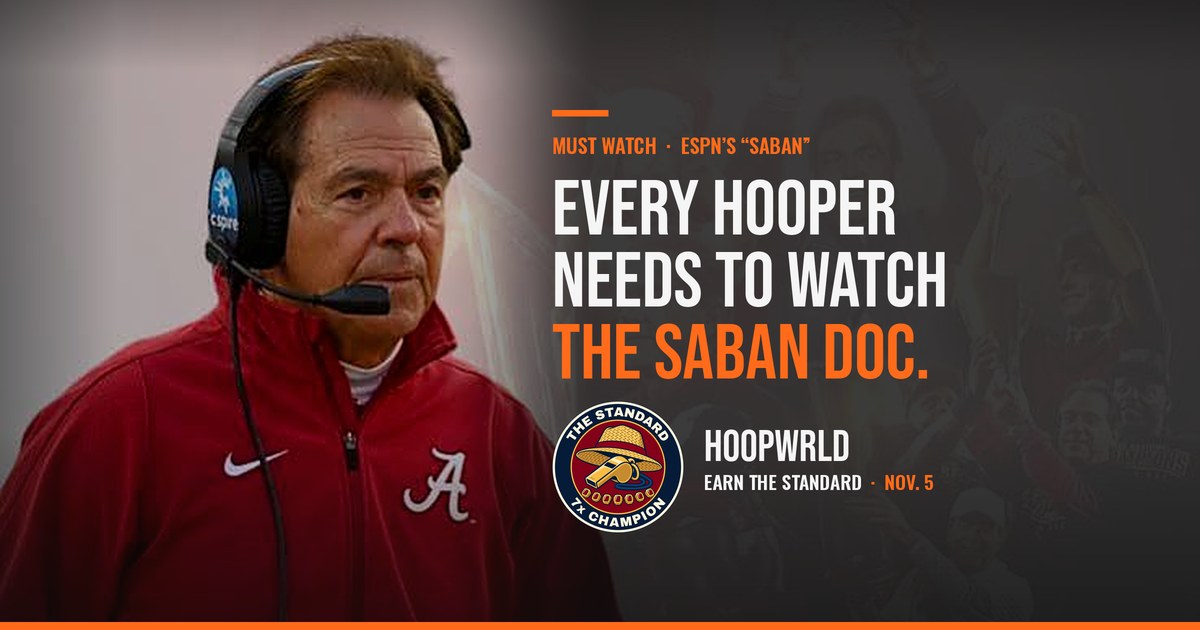
Must Watch · ESPN’s “Saban” He Coached Football. Every Hooper Still Needs to Watch This. Nick Saban never drew up