


|
The Mental Game Everybody In This Gym Looks Better Than You. Good.You walk in and the gym goes quiet in your head. The seniors are already warming up. One of them is dunking in layup lines like it costs him nothing. The kid guarding you in the first drill has a beard. A real one. Everybody looks bigger. Stronger. Faster. Better. Then the whistle blows and the coach starts yelling. At you. For your stance. For your spacing. For missing a rotation you didn’t know existed until four seconds ago. And the voice shows up: I don’t belong here. I can’t do this. Here’s what nobody tells you at 14. That voice isn’t a warning. It’s a receipt. It means you walked into a room above your level. Which is exactly where you’re supposed to be. | ||||||||||||
That Feeling Has a NamePsychologists call it imposter syndrome: the feeling that you’re a fraud about to get exposed, even when the evidence says you earned your spot. Researchers Pauline Clance and Suzanne Imes first described it in 1978. Almost fifty years later, it’s still sitting in every locker room in America. It’s not weakness. It’s not proof you’re soft. It’s what your brain does when the stakes go up. Freshmen feel it on varsity. Varsity guys feel it at their first college practice. Rookies feel it in NBA training camp. Nobody outgrows it. The ones who make it just learn what to do with it. You’re in good company
None of them walked into a gym and felt like they belonged. They walked in and made the gym deal with them. | ||||||||||||
The Comparison Is RiggedHere’s the trick your brain plays in that gym. It takes everything you know about yourself — every nerve, every doubt, every missed layup on replay — and stacks it against everything you can see about everybody else. Their dunks. Their swagger. Their calves. That’s not a fair fight. You’re comparing your inside to their outside. You don’t see the senior who threw up before his first varsity practice. You don’t see the starter who still gets tight when coach calls his name. They’re not showing you that. You’re not showing them yours either.
| ||||||||||||
You Think Everyone’s Watching. They’re Not.Every turnover feels like it’s on the Jumbotron. It isn’t. Cornell researchers ran a famous experiment: they had college students walk into a room wearing an embarrassing T-shirt, then asked them how many people noticed.
It’s called the spotlight effect. You overestimate how much people notice your mistakes because you’re the one living inside them. The kid behind you in the layup line isn’t tracking your air ball. He’s too busy worrying about his own. | ||||||||||||
Coach Is Yelling at You. That’s the Good News.Every player who’s been around long enough learns this one: coaches don’t waste their voice on players they’ve given up on. The kid you should worry about is the one coach stopped talking to. Coaching is information delivered loud. Strip out the volume and listen for the instruction. “Hands up.” “Sprint back.” “Talk!” That’s not a verdict on who you are. It’s a correction on one rep. So take it like a pro. Eyes up — look at him, not the floor. “Yes, coach.” Two words. No “but I thought.” Then fix it on the next rep. That’s the only answer that counts. Coaches forget the mistake. They remember whether you fixed it.
| ||||||||||||
Why the Best Players Feed Off ItMost people get this backwards. That feeling of not belonging isn’t what’s stopping you. For a lot of the best players you’ll ever share a floor with, it’s the engine. Think about it. If you walked into that gym and felt like the best player there, what would that tell you? That you’re in the wrong gym. Comfortable means you’ve stopped growing. The room that scares you is the only room that makes you better. Nervous means you care. Scared means it matters. Outmatched means you finally found competition worth chasing.
The players who make it don’t wait for the doubt to leave. They go to work with it riding shotgun. They turn “I don’t belong” into “not yet” — and then they go get the yet. | ||||||||||||
The Playbook: What to Do Tomorrow1. Win one thing nobody can take from you. You can’t out-dunk the senior yet. You can out-work him. First on the floor for loose balls. Sprint every transition, both ways. Loudest voice on defense. Effort doesn’t require talent, and coaches notice it before they notice anything else. 2. Shrink the question. “Do I belong on this team?” is too big to answer on a Tuesday. “Can I win this drill?” isn’t. Play the rep in front of you. Then the next one. 3. Make coach say it once. The fastest way to earn trust is to never need the same correction twice. That’s how the yelling turns into nodding. 4. Ask a senior about his first year. Find the older player who’s been there and ask. Nine times out of ten you’ll hear the exact story you’re living right now. Instant proof the feeling is temporary. 5. Put in the reps nobody sees. The gap closes in the empty gym. Get there early. Stay after. Fifty extra makes a day, five days a week, is 250 makes the guy next to you isn’t getting. 6. Write it down. End every practice with two lines: one thing you did well, one thing you’ll fix tomorrow. In a month you’ll have proof on paper that you’re getting better — and proof is the only thing that shuts that voice up. The Legacy Basketball Journal is built for exactly this. | ||||||||||||
Nobody Hands You BelongingNobody walks into a gym and belongs. Not Jordan. Not Curry. Not the senior dunking in layup lines. Belonging isn’t a feeling you wait for. It’s something you build — one rep, one correction, one practice at a time. So the next time you walk in and everyone looks bigger, stronger, faster, and better: Good. You’re in the right room. Now go earn your spot in it. | ||||||||||||
|
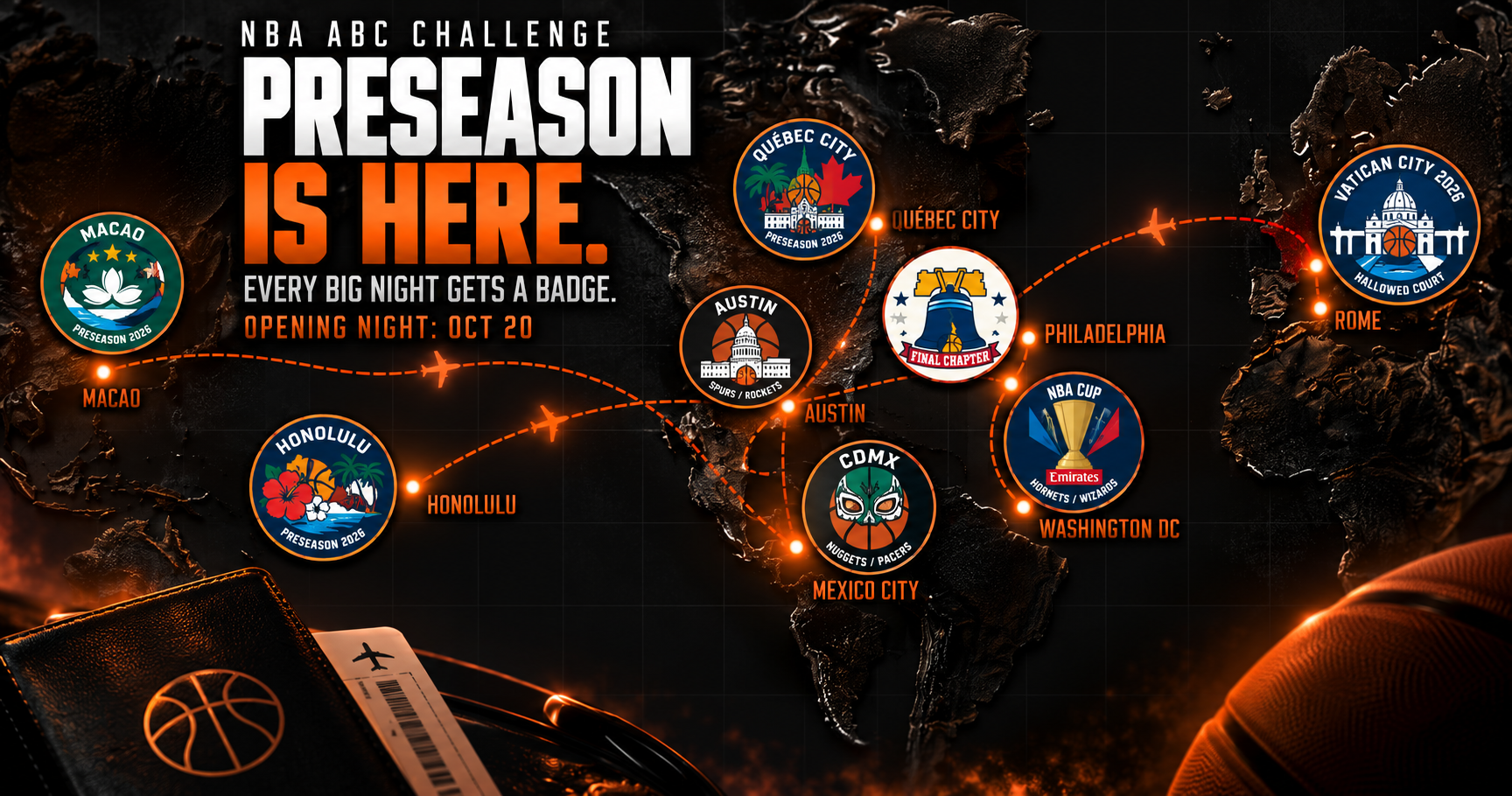
NBA ABC Challenge 2026-27 Season Preview · By HoopWrld Preseason Is Here. Every Big Night Gets a Badge. Preseason tipped